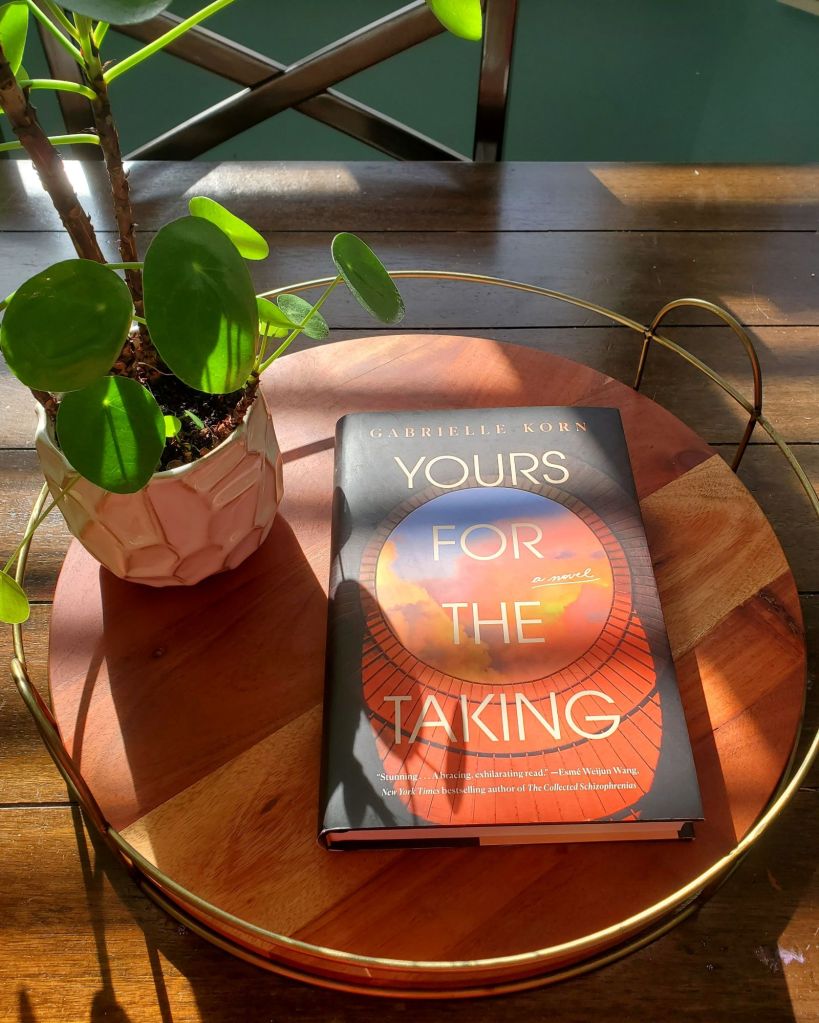
A generation forward on the same path we’re currently trekking finds a world suffering even more extreme consequences of climate change driving a select few to enter protected weather-proofed indoor communities to ensure survival. One such community, located in New York City, is founded by #GirlBoss billionaire CEO and fourth-wave feminist Jacqueline Millender whose Inside Project space is furnished with soft pinks and mauves filled with a disturbing number of white, educated, upper middle class women, and founded on the idea that in order to heal our world the patriarchy must be eliminated. While Millender decamps with the other 1%ers to spaceships orbiting our dying planet her feminist utopia upstart slides towards a dystopic future.
Yours for the Taking {#gifted @stmartinspress} offers some truly interesting ideas for consideration about power structures, systems of stratification and exploitation, and the necessary elements for a functional society. While I really dug the concepts I do wish I had found the narrative a little more compelling. Still plenty to appreciate here and I hear there is a forthcoming sequel, which I’d be interested to read.
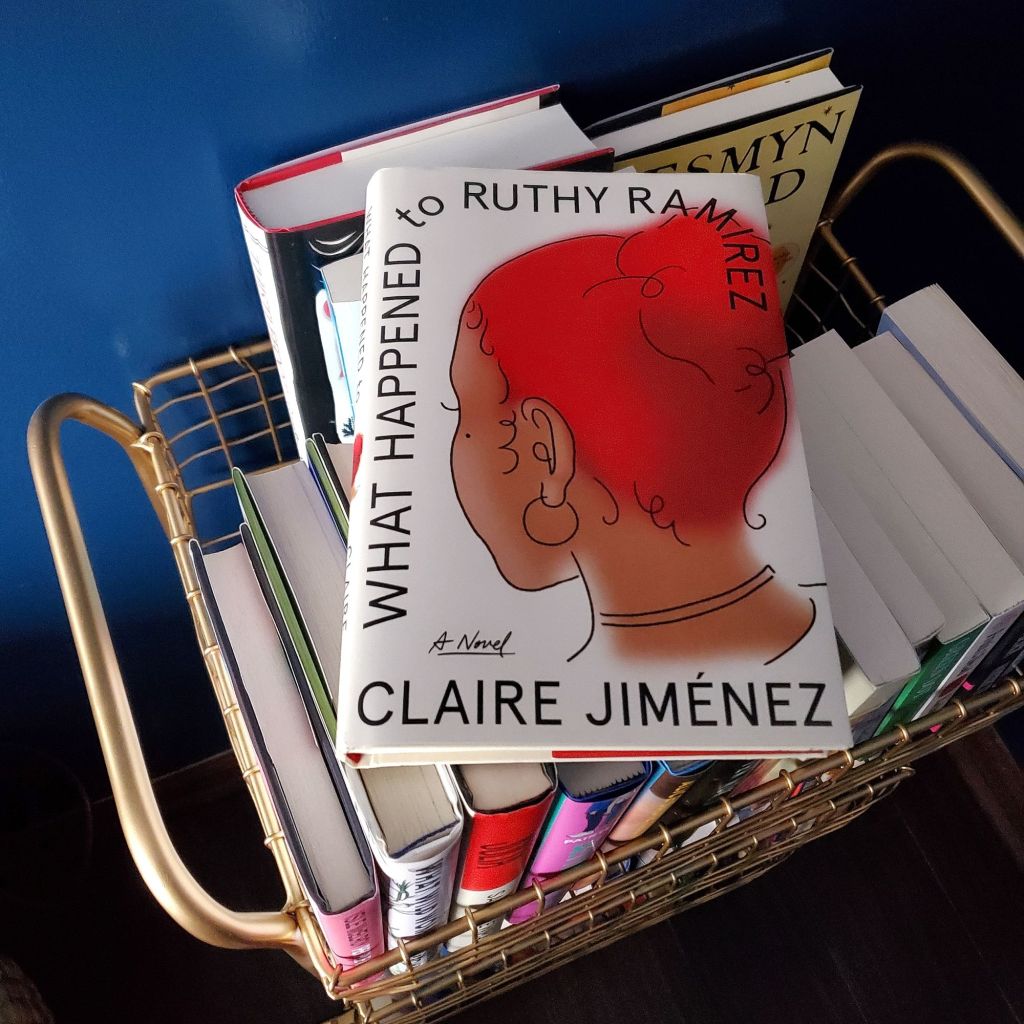
In 1996 13-year-old Ruthy Ramirez, the middle of three sisters, never returns home from track practice. Her Puerto Rican Staten Island family never found out what happened and understandably never moved past the loss.
12 years later, in 2008, Ruthy’s now adult sisters, Jessica and Nina, think a contestant on a reality television show called Catfight might be their long lost sister, renewing their hope she’s still alive.
What Happened to Ruthy Ramirez {#gifted @grandcentralpub} is really a character study of a family of women living in the specter of loss. The story bounces between 1996 and 2008, both periods far enough in the past to be recognizably nostalgic. The characters feel very alive and the mystery at the center of the story keeps the plot moving, it’s really quite well crafted and very readable if a little light on overall impact.
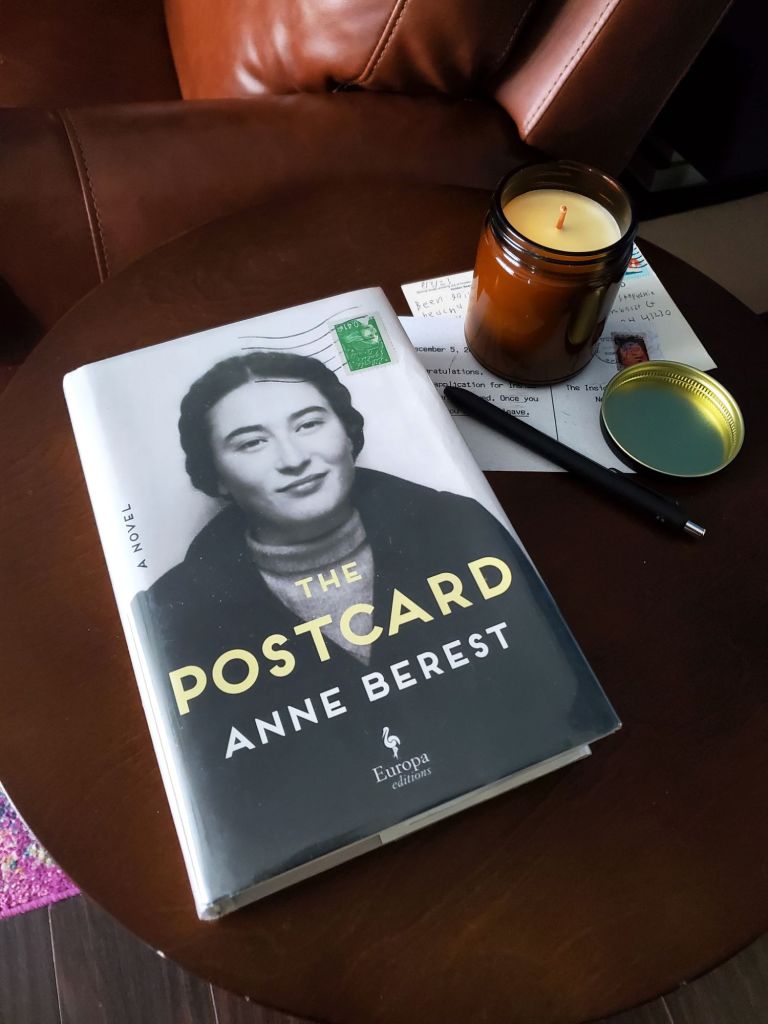
In 2003, an unsigned postcard arrives at the Berest home addressed to author Anne Berest’s recently deceased maternal grandmother, Myriam, with no message, just four names listed: Ephraim, Emma, Noemie and Jacques, her grandmother’s parents and siblings, all killed in Auschwitz during the Holocaust. This true event as well as the unraveling of the mystery of the postcard, which inextricably involves the unraveling of her family history, becomes The Postcard, a work of auto-fiction.
The Postcard is one of the most moving, impactful stories of the Holocaust I’ve ever read. Tracing the experiences of Ephraim, Emma, Noemie, Jacques, and Myriam in the lead up to, during, and following WWII is gripping, harrowing, and all too real. There are many WWII stories in existence (too many), plenty focusing on Jewish families, this one is exceptional. What makes The Postcard a truly brilliant, peerless work is the nuanced portrayal of Jewish identity in all its complexities both then and now, as well as the impact of our experiences then on our identity now.
When seventeen-year-old Marley moves to the small rust belt town of Mercury, Pennsylvania in 1990 she soon becomes part of the Joseph family for better or worse.
Marley, an only child of a single mother, is enamored with the Josephs, a roofing family with three sons. She begins joining the family for dinner and eventually ends up dating one brother, marrying the other, and becoming something of a surrogate mother to the third. Years on a discovery in the church attic will test the bonds of this family like never before.
Mercury {#gifted @celadonbooks} is a small town family saga full of complex relationships, secrets, loyalty, perception, roles, and expectations, those prescribed by others and ourselves; a story of the complicated web of family dynamics, dynamics which both shape us and are shaped by us.
I just loved this story and truly fell in love with the characters as the story unfolded. The structure allows the reader to know several of the characters both as others perceive them and then shifts providing a more intimate perspective of how they see themselves. This dichotomy provides so much nuance and depth to the story and its characters. There’s love, mystery, coming-of-age, trauma, and quite a bit of reflection on women’s roles in family. Really a lot to chew on and appreciate.
Recommended for fans of Ann Napolitano’s Hello Beautiful and anyone who appreciates a good family drama.
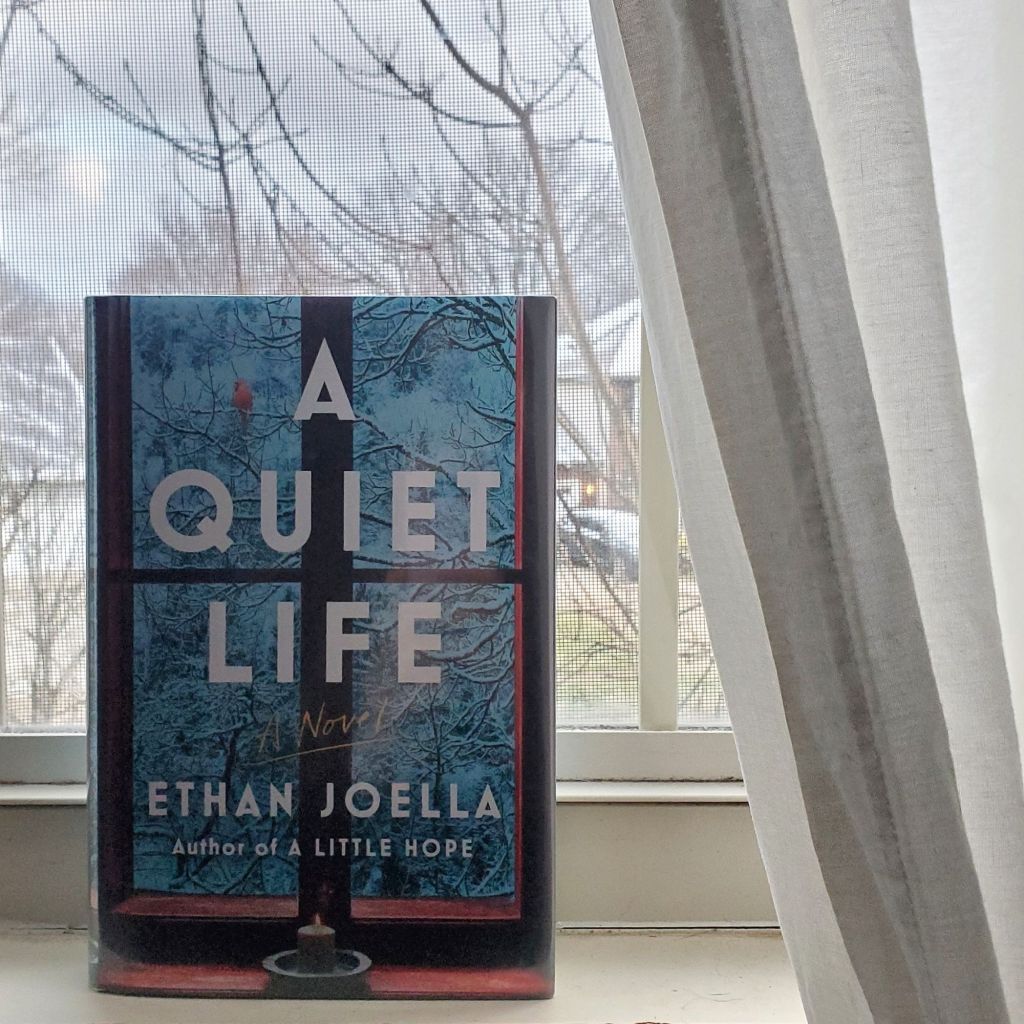
Three citizens of small town Bethlehem, Pennsylvania struggle with grief and loss their paths eventually knitting together in unexpected and beneficial ways.
A widower in his 70s lost his wife to illness; a young woman lost her father to random, unexpected violence; a mother’s young daughter is lost to her amidst a custody dispute.
The wintery setting and themes of interconnectedness, community, and kindness make for a supremely cozy read.
A Quiet Life was the perfect book to kick off the new year with.
This heartwarming story would make for excellent snowy weekend reading!
Tell me: what’s the weather like where you are?
In Ohio we have cold, windy, rain with some flurries on the way along with bitterly cold temps and windchills.
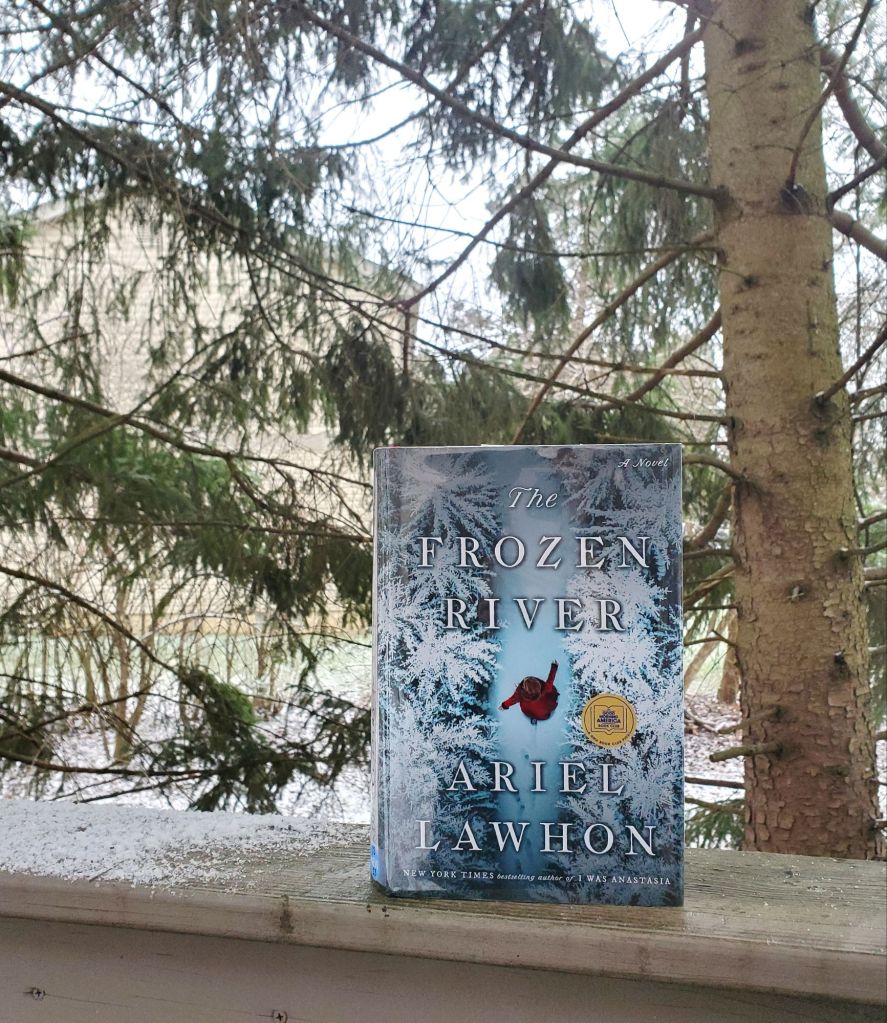
Inspired by the diaries of real life 18th century midwife Martha Ballard The Frozen River is a fictionalized account of Ballard’s involvement in the case of a man accused of rape found dead in the frozen river of post-Revolutionary Maine.
In 1789, 54-year-old midwife Martha Ballard is called to examine a body recovered from the freezing river running through town. The obvious assumption is death by drowning, though upon Martha’s examination she determines he was beaten then hanged before entering the river. When called before the court to testify to her findings Martha encounters pushback from those in authority seeking to discredit her. This case is further complicated by the body’s relevance to a concurrent rape case in which Martha is also entangled.
I don’t read a ton of historical fiction, but felt called to The Frozen River by a combination of trusted reviews, the post-Revolutionary setting, and feature of a historical midwife. So much can be understood about society by entering the sphere of women. I ended up rapt by this story and Martha Ballard.
This was my final read of 2023 and hybrid I read it in single day {thanks to Libro.fm for the gifted audio!} both print and audio format are excellent.
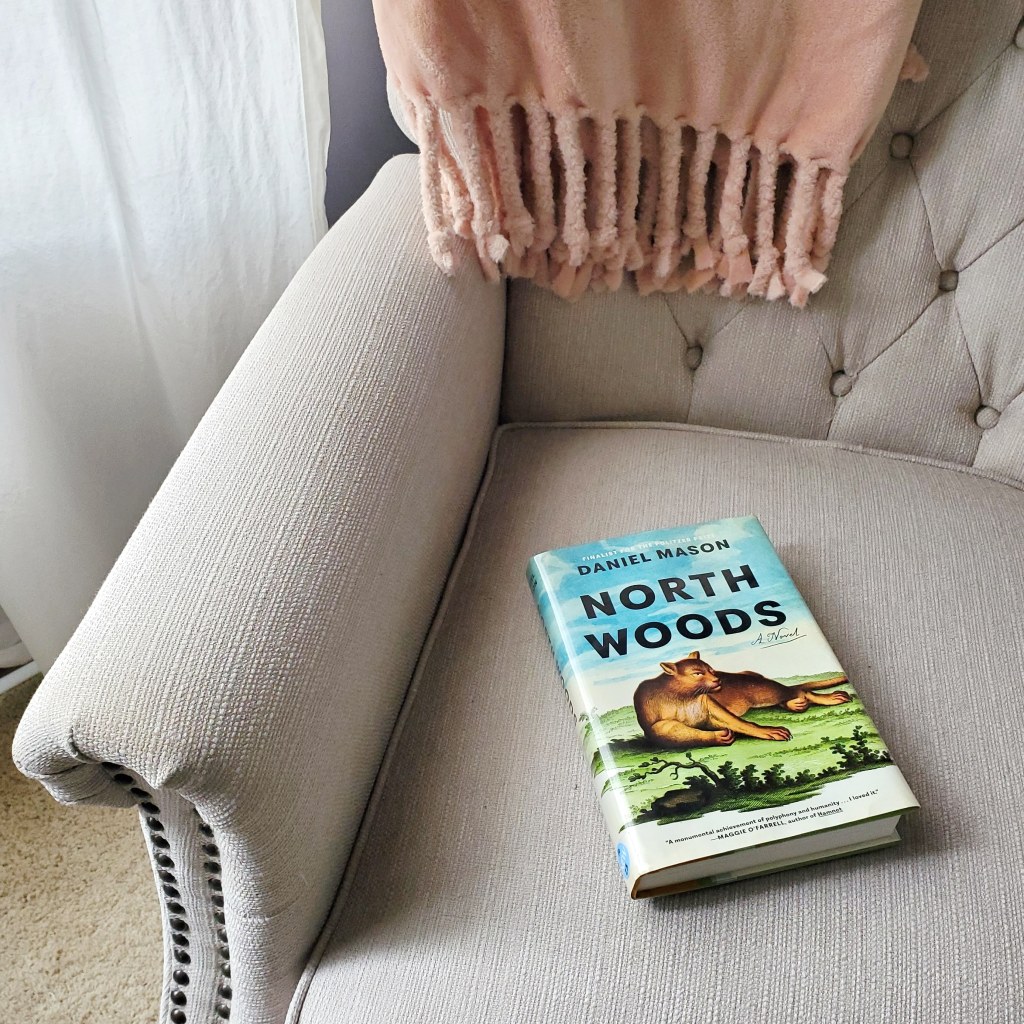
Centuries of history as told by the various inhabitants of a single house standing in the remote north woods of Massachusetts from its 17th century construction by young Puritan lovers absconding from their settlement right up to near present day. Not only does the story inhabit a range of characters and their stories, it’s also supplemented with additional media such as journals, letters, songs, and even case notes at one point.
Author Daniel Mason penned North Woods in twelve installments, one per month, over the course of a single year and the novel follows a similar structure with the interconnected stories spanning hundreds of years told across twelve months. The lush description of the natural world surrounding the cabin is just as important to the story as the characters and cabin itself.
This was something of a sneaky read for me. It was one of my last reads of 2023 and ended up a favorite. I liked it right from the start, but my impression grew and grew as the story unfolded and I became so impressed by the layers and echos, the interconnected stories knit so well together and had so much to say about time, succession, history, the cycle of seasons, humanity, and nature.
Plus, oddly enough, reading North Woods recalled both Black River Orchard and The Vaster Wilds, also 2023 favorites and wildly different books! Random and appreciated.
Time’s Mouth {gifted, thanks Counterpoint Press} opens in the 1950s with teenage Ursa fleeing a difficult childhood in New England for the counterculture of California. Ursa, who has the ability revisit points in her past, soon settles a matriarchal commune in the woods, a place meant to be a safe haven for women who are drawn to her powers, but the next generation, the children of the commune don’t experience this mystical house in the woods as the safe space it’s meant to be.
Time’s Mouth is a multigenerational saga chronicling three generations of one Californian family from the founding of a 50s/60s matriarchal Commune in the woods turned cult to seeking a more traditional life in 80s/90s LA and coming full circle in the new millennium.
About motherhood and the way secrets, trauma, and fear reverberate and cycle through generations; time and its passage, the gift of the present, and memories that have the power to both heal and harm. There is a really intriguing element of magical realism where some characters have the ability to revisit their past in a very visceral/time travel sort of way, and the whole story has a hint (it’s subtle, but I so appreciated it!) of dark fairytale about it.
A unique story with a strong sense of place and the vibes felt like they called right to me. Loved this one!
In Poverty, by America sociologist Matthew Desmond shifts the typical perspective from who is poor, how, and why, to who benefits from poverty.
The answer?
All of us.
In this manifesto Desmond posits poverty in America, something impacting more than 1 in 9 Americans, is not an unfortunate byproduct of our system or a choice made by individuals who just won’t bootstrap harder, but rather a reality by design: some are intentionally kept small so that others can prosper. In other words ours is a system of exploitation.
I found this entire book interesting, I probably made more notations while reading this book than ever before, but I found a few points especially enlightening:
Government aid is primarily spent on the wealthy.
Wealth is needlessly subsidized in America. We spend an incredible amount of money giving tax breaks that benefit the middle and upper classes. Tax breaks for things like mortgage interest, college savings, wealth transfers, and IRAs (don’t even get me started on capital gains and dividends, or the whole corporate welfare topic) subsidize affluence.
For example, let’s examine a single one of these tax breaks: mortgage interest. This is common, right?
Roughly 2/3 Americans are homeowners. But all homeowners don’t automatically receive the mortgage interest tax deduction, in order to qualify you have to itemize your tax deductions. In order to itemize you have to have enough deductions to benefit beyond the standard deduction most of us take. In fact, after the GOP under Trump passed 2017’s Tax Cuts and Jobs Act, which benefitted corporations and wealthy Americans, fewer than 14% of Americans itemize their tax deductions (this down from somewhere around 1 in 3 before.) [Forbes]
How’s that trickle down going? Still waiting?
We spend $190 billion per year on mortgage interest tax deductions compared with $50 billion on housing subsidies for the poor. Only about 1 in 4 people who qualify for housing subsidies actually receive them, waiting lists are years long to participate in the program.
There are certainly theories behind these types of incentives, but investing the massive amounts of money into these tax credits that really aren’t make or break for those taking advantage of them makes no sense when that money could be spent lifting people out of poverty and ensuring basic needs are met.
1% of income earners are responsible for an estimated $175 billion per year in unpaid taxes.
That’s BILLION, with a B, $175,000,000,000 PER YEAR. [WaPo] Expanded to the top 5% and it adds up to $305 billion. That’s a lot of food stamps and housing vouchers.
I’m already approaching this topic from the perspective of money being a construct and poverty being a construct, but a lot of people want to be all, “I’d love for millions of children to not go hungry BUT HOW WILL WE PAY FOR IT?!” I’m team ‘eat the rich’ myself, but it sounds like if the ultra wealthy were expected to simply pay their taxes just like the rest of us are that would go a long way to paying for things. In fact, it would roughly be enough to solve poverty entirely. I want you to think about this the next time you hear someone complaining about Biden funding the IRS with the Inflation Reduction Act. (Or anyone complaining about raising the debt ceiling. I’ve got a way to balance your budget right here with, read my lips: no new taxes!)
I was also surprised by the statistics on welfare avoidance and lack of uptake as well as the shocking amount of unspent federal dollars some states are sitting on. (I’m looking right at you Tennessee with your $790 million; must not be any needy families there.)
Poverty is a systemic problem in need of systemic solution, but small steps really do add up to great change and Desmond offers the concept of individuals becoming “anti-poverty” as an important piece of poverty abolition. He essentially says we’re all culpable for the rampant disparity in the US by ignoring the ways we benefit from the status quo, by not demanding better, and by not being involved in the work of change.
This ostensibly looks something like: consumer activism, for example, shopping at stores you know pay living wages; showing up to community meetings where angry suburbanites are opposing low-income housing to express your support; pointing out we could fund a lot of things with an extra $175 billion/year the next time someone you know is pushing a conspiracy theory about IRS funding; wearing a slow fashion ‘eat the rich’ shirt (just kidding, mostly, but it might make you feel better personally.)
I don’t think he’s wrong about any of this, but I do think we have to take one step further back: we have to imagine better for ourselves. I think it’s much too easy to give into division and despair, to see this as an individual issue rather than a systemic one, to buy into the bootstrapping ‘American Dream’. I mean, we recently saw Congress allow a policy to expire that cut child poverty in the US by 50%, thrusting those same children right back to where they started with nary a peep of pushback. (This the expanded child tax credit which gave eligible families $250-300/month.)
This all makes me think about a study recently conducted by the Wall Street Journal which shows “traditional values” such as religion, patriotism, family, and community involvement have declined in importance over the last 25 years, but what has increased in self-reported importance? Money. I imagine things like lack of economic confidence and increasing income disparity among other things are responsible for these findings which hint that this division has an impact on what we consider core values, the things that make us us. It’s hard to prioritize having children if you are already having trouble making ends meet. Likewise it’s hard to care about something like community involvement when you’ve been sold the idea that others are coming to take what’s yours and you must defend it at all costs.
We’re a better version of ourselves when we aren’t constantly confronted by and asked to abide the realities of disparity, when we aren’t operating from a mindset of scarcity, when we are actually working towards living up to our democratic values of liberty, equality, and justice for all.
First we have to see that poverty doesn’t have to exist and our reality is not zero sum; we all do better when we all do better. Then we must confront the ways we’re complicit with the status quo.
(If it isn’t already clear, I think this is a must read.)
Also, Matthew Desmond was recently interviewed about this book and topic on The Ezra Klein Show and I would highly encourage a listen either in place of or as supplement to reading the book.
I went into this book anticipating a thriller. It is not that and that’s totally on me for assuming. I wish I had a better understanding of what to expect going in.
What The Latecomer is is a dysfunctional family drama, deeply character driven, and literary; exploring themes like class, privilege, race, sibling and family dynamics, and the echoes of grief and trauma across generations.
The story follows the wealthy Oppenheimer family of NYC beginning in 1972 when a tragedy results in parents Salo and Johanna meeting; through the 90s and aughts while the Oppenheimer triplets, born via IVF after years of fertility struggles, never live up to their mother’s idealized expectations of family; up to present day when the coming of age of their sibling, with whom they shared a petri dish, but not a womb, who wasn’t born until 18 years later, has impactful ramifications on their family unit.
This book is close to 500 pages long and it’s one to really settle in with and be patient. I found it well written and immersive and enjoyed the ride, but this is not going to be the book for readers who require a quick moving plot to keep their interest.
Definitely one to pick up if you appreciate messy family dynamics.




 That Bookish Life