Thanks to the author for providing a complimentary review copy.
All the Summers In Between is a story of complicated female friendship set in the Hamptons and told with dual timelines: the summer of 1967 when local girl Thea meets wealthy summering socialite Margot, and 10 years later on the night of Thea’s 30th birthday celebration when Margot unexpectedly returns to town. Thea, who once had artistic aspirations, is now a wife and mother, while Margot has left her husband and his questionable business dealings behind in NYC. Margot is looking to Thea for safe harbor, but the two haven’t seen or spoken to one another since the summer a decade ago when their quick, intense friendship mysteriously ended.
This is a quintessential beach read! I really enjoyed the 60s and 70s setting, it’s captured so well, the exploration of female friendship dynamics as well as the roles we fall into or choose for ourselves adds a little meat to chew on and the mystery surrounding Margot and Thea’s falling out keeps the pages turning. All steeped in a background of sand, surf, and sunshine – perfect poolside or beach reading!
Thanks to the publisher for providing a complimentary review copy.
A multi-generational family saga set against the backdrop of changing values and turbulent times.
Spanning WWII to just beyond present day this story is largely set in the mid-50s, told from Nick and Bets points of view, and the late 60s into the early 70s featuring their young adult children, Katherine and Harry. Their stories swirl around and return over and over to Last House, their family’s idyllic remote country home in the mountains of Vermont.
Through the Taylor family Last House explores the divide of the Silent Generation, those who experienced the Great Depression and fought in WWII, returning from war and settling into very traditional roles, and their children, the Baby Boomers shaped by the Civil Rights Movement, Rock and Roll music, the Vietnam war, and counterculture, those who rejected and challenged the traditional roles of prior generations.
It’s also a story about evolving ideology and features U.S. historical events and politics woven into the story. Nick is a lawyer for American Oil who rubs elbows with the CIA and is involved with Middle Eastern dealings, especially in Iran. Katherine is a journalist for a radial left NYC newspaper reporting on Vietnam War and Civil Rights protests of the day.
I found all of this nuanced and compelling, interestingly layered and incredibly relevant to today.
It’s common to hear “reading goal” and immediately think about an overall number goal. Goodreads is probably the best known reader-specific platform and their annual reading challenge encourages readers to kick off the new year by pledging to read a certain number of books a year.
While I find it incredibly satisfying to see that little bar on the tracker tick up closer and closer to my annual goal (which I always set as the number of books I read the year previously, FYI) reading is about SO MUCH MORE than the number of books you read in the year. And your goals can, and arguably should, be about more than just a number.
Reading Goal Ideas
Read one classic a quarter
Participate monthly in a book club or read along (either a private or public one like Good Morning America, Read with Jenna, or other celebrity club)
Read an entire awards short- or longlist
Read one unread book from your shelves per month
Purchase and read one new book from your local indie (or bookshop.org!)
Read a different genre every month
Read books written by authors of a different background every month (try books in translation, or writers from underrepresented groups)
Read for 30 minutes a day (or whatever amount of time works for you)
Read every day before looking at anything on your phone (or just opening your preferred social media app)
Read one borrowed book per month (whether that be from a friend or your local library)
Read one book a month recommended by a friend
Read aloud daily/weekly/quarterly to your kids
Read one debut author per month
Read a favorite author’s entire backlist
Read one non-fiction book per month
Track all of your reading (whether this by in a journal, app, or spreadsheet)
Write reviews for every book you read (even if they’re short!)
Read around the world (try a new story setting or author country origin each month)
Complete a reading challenge (POPSUGAR comes immediately to mind, but there are many others out there)
Read a book set in each season while in that season
Read one chunky book per quarter
Read a book inspired by each heritage month paired with that month
Read one author of color each month
Read 20 pages per day
Read a biography for each U.S. president
Only read books that you own or borrow, no new purchases for the year
Try a new format (audiobooks, e-books)
Read a book to film/tv adaptation and watch the movie
Read a book and cook a meal inspired by it
Host a buddy read, read along, book club, or reading sprint
Re-read a favorite from previous years or childhood
Judge a book by its cover (pick a book at random based on cover alone)
Second chance (revisit a book you did-not-finish previously)
Read a fiction and non-fiction book pairing (these books could share a setting, topic, time period, etc.)
Read a retelling and the original that inspired it
Read a book published in your birth year
Read the book that has been on your TBR the longest
Try a new genre
Read a book published in your birth year
Learn to do something new from a book
Some of these reading goals are year long endeavors, some are one offs, more of a mix and match, choose-your-own-adventure variety. All can be scaled up or down depending on your needs. Is one classic a quarter too easy? Aim for one a month! As I said previously, an important part of setting reading goals is evaluating yourself as a reader and targeting your goals for your individual needs.
2023, the year that brought the “Deinfluencer” influencer trend, a trend which ostensibly began with actual trending posts encouraging people to consume less or avoid certain overhyped (over compensated) products, quickly morphed into yet another marketing strategy of cheeky talking points (“don’t buy this, it will make your skin too clear”) or straight up pivoting to selling other products, seems to have spilled over into the book world making 2024 the year of rejecting reading goals.
It’s traditional in bookish communities to kick off the new year by setting intentions for the reading year ahead. Label them what you will, but setting a quantitative reading goal, pledging to read more from your own shelves, identifying titles to be read in 2024, even pledging to read less in the year ahead, these are all reading goals.
This year I noticed a trend with many book influencers pledging to read less in 2024 and/or rejecting the concept of reading goals completely, confoundingly this was often followed by a whole list of “goals” for the year ahead.
Look, I am totally a fan of relieving unnecessary pressure from any and all possible areas of your life. If eschewing goals makes you happy, be happy.
Also, if you’re a casual reader, like most readers are, (nearly half of American adults did not read a single book in 2023. If you read 2 books you’re already in the top half of U.S. readers.) you might not be interested in setting any goals or intentions for your reading life, and that’s completely reasonable!
However, most readers in bookish spaces of the internet are not casual readers, they are in the top fraction of 1% of all readers (if you read more than 50 books last year, congrats! You’re a 1%er! At least when it comes to reading.) We are steeped in books, our TBRs are never-ending, we are juggling front- and backlist books, advanced reading copies and new release days. We are not typical readers and I think it’s reasonable, if not recommended, to approach reading with intention; to challenge ourselves in an enjoyable way, or just to identify what is most important to our reading lives.
Knowing yourself as a reader brings benefits to your reading life. Knowing yourself involves reflection: knowing what you like, what you’d like to explore, where you can afford to be challenged, what will help you to feel accomplished, and how much leniency to give yourself to mood read, or browse bookstore shelves, or scoop up hyped new releases.
When you read hundreds of books a year and are aware of thousands of new and upcoming releases I think approaching your reading life intentionally, setting some goals, is not just recommended, but important. We only have so much reading time to go around and so many, many books to be read! Reading intentionally helps you know what to prioritize and where to allocate your limited time.
Winner of the 2022 Pulitzer Prize for nonfiction, Invisible Child is an utterly heartbreaking, maddening, and necessary read.
Journalist Andrea Elliott embeds for eight years with a family, two parents and their 8 children, enduring poverty in NYC. Elliott focuses her spotlight on eldest child Dasani, 11-years-old in 2012 when Invisible Child begins, to share what it’s like to grow up housing insecure, hungry, disadvantaged, victimized, displaced, and trying to survive within a terribly broken system. Dasani and her family’s story underscores just how willing we are to invest in poverty and policing and broken cycles, setting people up for failure, rather than investing in success and improved outcomes or even just how unwilling we are to see the humanity of those caught up.
An incredible feat of reporting and a must read.
I listened to this on audio and it was excellent in that format!
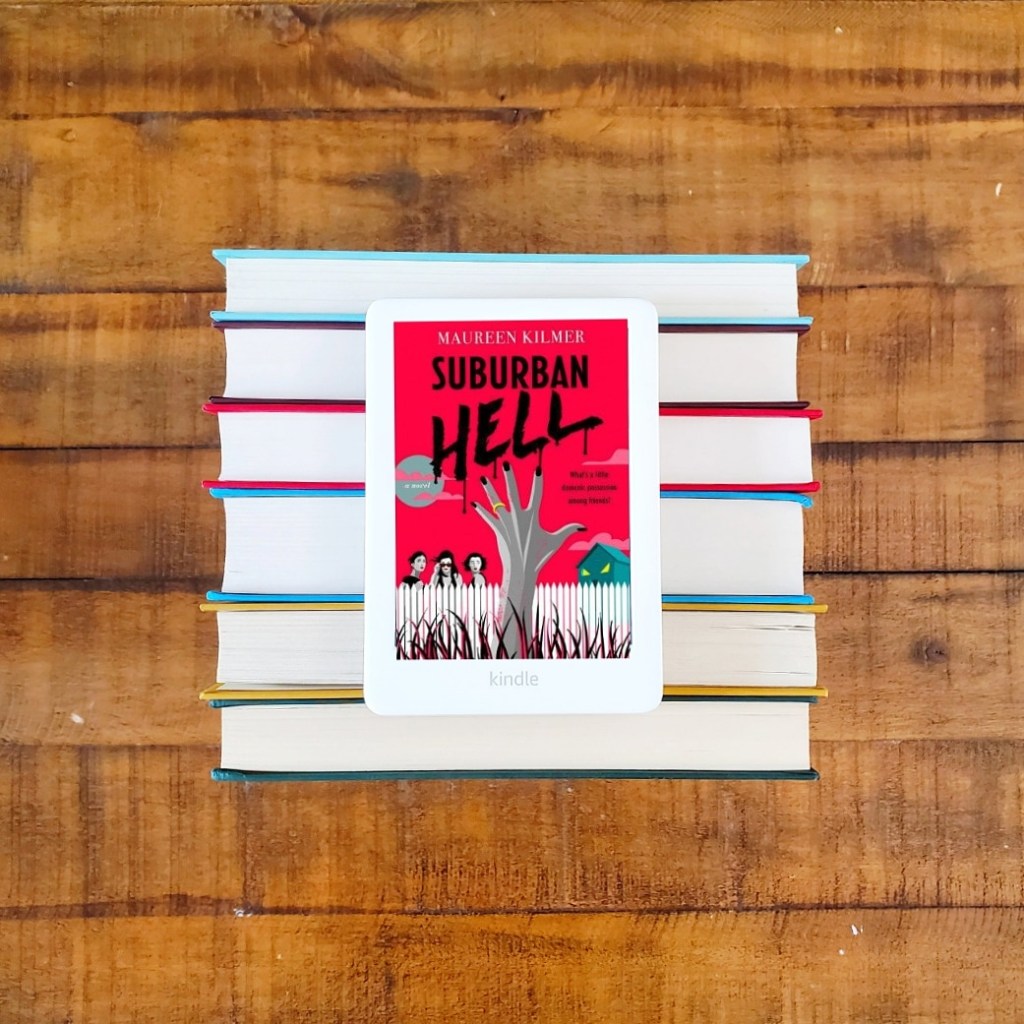
Set in an all too familiar mundane suburb where the scariest thing one usually has to contend with is an overzealous HOA comes real evil.
When Amy’s friend Liz is possessed by a demon unearthed after breaking ground on her backyard She Shed Amy bands together with other neighborhood women to banish this evil entity back where it belongs all while coordinating volunteers for the upcoming school carnival.
Suburban Hell is a FUN read! There’s obviously some overlap with Grady Hendrix here, but while his books lean more towards horror Suburban Hell is more like Liane Moriarty decided to dip her toe into horror. Suburban Hell is women’s fiction domestic drama meets demonic forces and it doesn’t take itself too seriously. It’s campy and absurd and at times horrifically funny – one scene involving a rogue robot vacuum had me chuckling out loud – and there is an admirable undercurrent of themes like the pressures of modern motherhood, the pitfalls of isolation, the importance of community, and the power of female friendships.
Suburban Hell is a fantastic addition for your Spooky Season reading!
Thanks to Netgalley and Putnam Books for the advanced reading opportunity.
Told with a non-linear timeline The Island of Missing Trees takes us from 1970s Cypress amidst rising tensions between the island’s citizens to modern day London following a family: Greek Christian, Kosta, Turkish Muslim, Defne, and their daughter, Ada, as told through the narration of a fig tree central to their story.
The Island of Missing Trees has love, division, war, joy, tragedy, and interconnectedness. It’s a story of secrets, generational and lasting trauma, the dual sided impact of separation and violence, the displacement of immigration, and the places love can lead us. I would have maybe loved some deeper characterization, but I really appreciated this story.
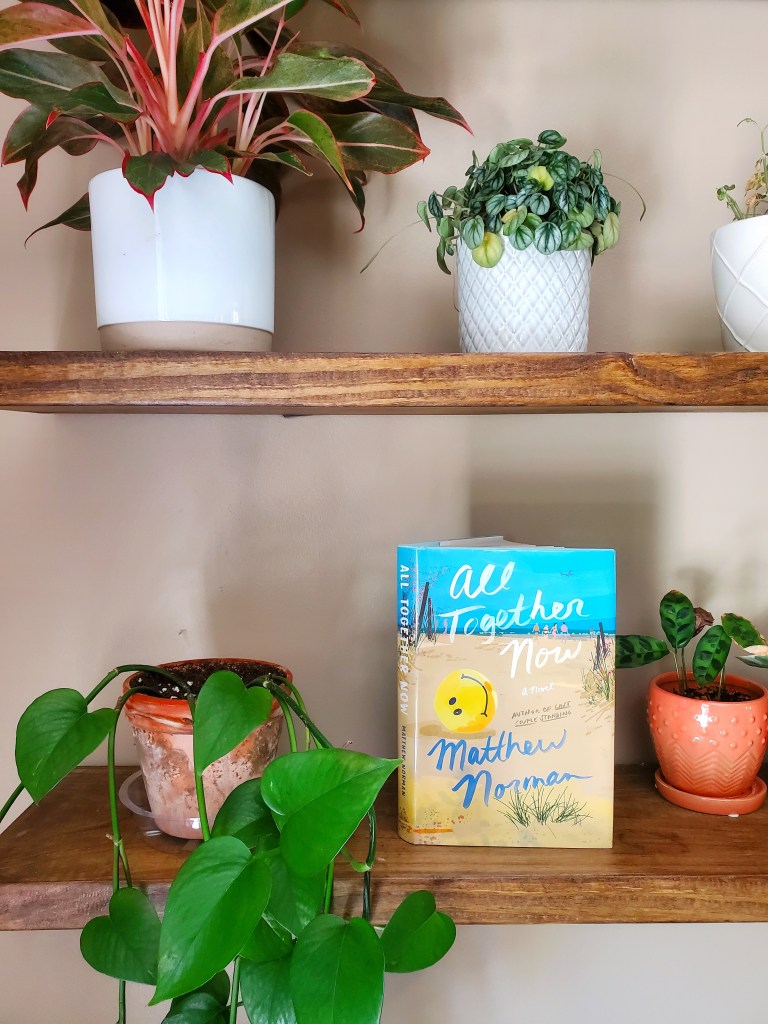
Four highschool friends, now in their mid-thirties, come together for one last beach hurrah after one of them is diagnosed with terminal cancer. Each is struggling in their own way and has hidden those struggles from the others through the slight of hand of distance and time.
Much like the reunion in the book, despite the sad circumstances All Together Now is ultimately sweet, nostalgic, and life-affirming, plus (Imaginary) Taylor Swift makes an appearance.
The plot is entertaining enough and I really enjoy Matthew Norman’s playful yet insightful writing style.
All Together Now would make for an excellent beach/travel read!
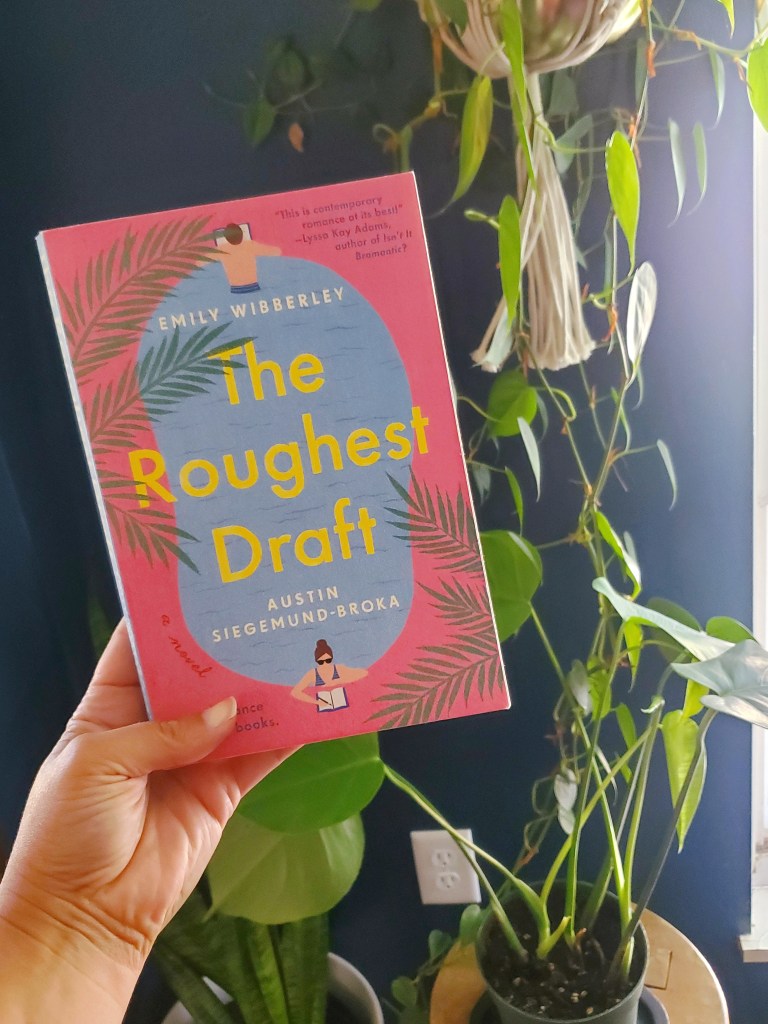
Three years ago friends Katrina and Nathan together wrote a breakout bestselling novel. Shortly after publication their writing partnership was kaput amidst much speculation and silence from the duo. Now, they’re forced together again, back to the Florida bungalow where the magic happened to fulfill their contract and produce one last book together. But more than flowery prose is blooming by the last page.
I recall quite a bit of hype surrounding The Roughest Draft at one time followed by some lackluster reviews.
TL;DR: it was a bit of an uneven read for me but I didn’t hate it!
First, this book gives off major beach read/rom-com vibes, yeah? I mean, GREAT cover, but it doesn’t fit this book at all. It’s a romance, but a pretty melancholy one, not what I’d expect to be sporting a happy pink cover.
Second, it’s blurbed by Lyssa Kay Adams of Bromance Book Club fame. The style is not at all congruent with Adams’. Not a good tone to set.
I think The Roughest Draft is suffering from marketing related issues.
The Roughest Draft has rom, but no com. It’s more of a rom-dram(a).
Nathan and Katrina are struggling with both professional doubt and their romantic feelings for one another. The chemistry abounds between these two and the story is very character driven. I think the problem (other than the incongruent marketing) is this character driven story lags in the middle due to lack of development. We never really get to know Nathan and Katrina outside of their couple dynamic and without a strong plot to propel the narrative it just kind of spins its wheels for a bit. Maybe the story could have benefitted from more editing?
That said, I quite liked the beginning and end and I really dug the way the MCs communicated through their fictional writing. With proper expectations The Roughest Draft isn’t bad, I found it refreshingly different within the romance genre.
Also, the book is written by a husband and wife duo and it was really interesting reading about dynamics of co-authoring. While reading I was wondering how much of themselves they wrote into this story.
Two families of childhood best friends vacation on an exclusive island off the coast of South Carolina. One family is wealthy, the other working poor; before the trip is over tragedy befalls them.
I loved both The Gunners and Chorus. When I saw Rebecca Kauffman had released a book between the two and it was a vacation type read I knew I had to prioritize it this summer.
Unfortunately The House on Fripp Island didn’t quite live up to expectations. I found this a serviceable beach read, but lacking the depth of characterization I appreciate in Kauffman’s other novels and very much wanted from this story.






 That Bookish Life